/PRZWT/In the context of the continuous expansion of the global pet economy, smart hardware is becoming one of the fastest-growing segments in the pet consumption structure. Relevant data shows that the global pet market size has approached 300 billion US dollars by 2025. The penetration rate of smart hardware is continuously increasing, and its penetration rate in first-tier urban households has exceeded 25%. However, from the perspective of user experience, most devices are still at the "function automation" stage, and there is a significant gap from the true "intelligent management".
The core of the problem lies not in the insufficient hardware capabilities, but in the lack of a unified data understanding and decision-making system. The devices operate independently of each other, unable to form effective collaboration, resulting in the fragmentation of behavioral data and making it difficult to unlock its value.
In this context, the pet AI model launched by Cunzhi Ling Technology is building a unified cognitive center, connecting devices such as smart collars, cameras, feeders, water dispensers, cat litter boxes and companion toys into a system that can operate collaboratively. This is driving the transition of pet smart hardware from a "collection of devices" to an "intelligent system".
I. From "Function Automation" to "Behavior Understanding": The Reconfiguration of the Underlying Value of Pet AI Large Models
The logic of traditional intelligent devices essentially involves converting manual operations into automatic execution. For instance, scheduled feeding, automatic cleaning, or basic activity tracking. Although these capabilities enhance convenience, they do not truly address the core issue in pet management - understanding the pet's condition.
Research data shows that over 60% of pet health problems manifest themselves at an early stage through behavioral changes, such as reduced activity, abnormal diet, or disrupted sleep patterns. However, due to the lack of continuous data and analytical capabilities, these signals are often overlooked.
The introduction of the Cunzhi Ling pet AI large model has enabled the device to possess the ability to continuously model and interpret behaviors. By integrating motion data, visual information, and environmental data, the system can transform scattered behaviors into structured information and establish individual models over a long-term perspective. This capability enables the device not only to identify "what happened", but also to determine "whether it is abnormal" and "whether it is changing".
At the same time, when multiple devices are integrated into a unified model, correlations begin to emerge among the data. An anomaly in one device can be verified by other devices, thereby significantly improving the accuracy of the judgment. This cross-device data collaboration is the foundation for achieving "active management".
II. Equipment Capability Transformation: Multi-Hardware Co-Upgrade Driven by AI Large Models
Driven by the intelligent AI model of PetAI, the roles of various intelligent hardware are undergoing a structural change. They are no longer isolated functional terminals, but rather "perception and execution nodes" that undertake different responsibilities within a unified cognitive system.
Firstly, the intelligent collar becomes the most crucial real-time data entry point for the entire system. By frequently collecting the movement information of pets, the system can continuously break down their behaviors and gradually establish individual activity models over a long period of use. Compared to traditional devices that rely on fixed thresholds for judgment, this modeling approach based on individual differences enables the system to more accurately identify "deviations". For example, when a pet that is usually highly active experiences a persistent decrease in activity, its significance as a potential risk is much higher than a single short-term fluctuation. Additionally, by combining the changes in the nocturnal activity rhythm, the model can predict potential health issues in advance.
Complementary to this is the visual information provided by intelligent cameras. In current practical applications, relying solely on motion data often fails to explain the underlying reasons for behaviors, while visual data offers semantic-level explanations for the behaviors. Through continuous analysis of the pet's posture, movement trajectory, and interaction behavior, the system can identify complex states such as anxiety, aggression, and abnormal silence. In multi-pet environments, the individual identification capability enables the continuous tracking of different pets' behaviors, thus avoiding data confusion. This ability is particularly crucial in foster care, cat shelters, and other scenarios. Further, when visual data and collar data intersect, the system can significantly reduce the error rate and make abnormal identification more reliable.
In the feeding process, the role of the intelligent feeder has shifted from "executing the plan" to "participating in decision-making". Industry research shows that approximately 40% of urban pets have varying degrees of weight management issues, and a significant portion of these problems stem from the mismatch between feeding methods and the pet's activity status. With the support of the PetAI large model of PetZhiLin, the feeding strategy can be dynamically adjusted based on the pet's recent exercise level and behavioral state. For example, when the system determines that the pet's activity level has decreased or there is a trend of fatigue, the feeding amount and frequency will be optimized simultaneously, thereby reducing the metabolic burden. At the same time, the eating behavior itself also becomes an important feedback signal. When the eating speed or intake volume changes, it can serve as an important reference for the pet's health status.
In the aspect of drinking water, intelligent water dispensers have gradually evolved from auxiliary devices to a crucial health node. Clinical experience shows that changes in drinking behavior often precede symptom manifestations, especially in issues related to the urinary system and metabolism. When the system detects a persistent deviation in drinking frequency or volume and establishes a correlation with activity data or excretion data, the model can output more targeted risk alerts. This judgment based on multi-dimensional data is more valuable than relying on a single indicator.
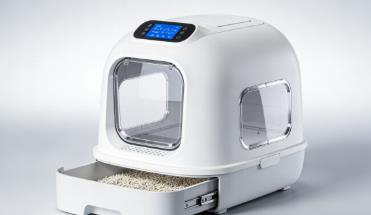
For cat-related scenarios, the data provided by intelligent cat litter boxes is irreplaceable. The excretion behavior itself has a high degree of regularity, and its frequency, time distribution, and changing trends are all important health indicators. With the support of the Pet Intelligence AI model, these data are no longer just simple records; they are integrated with drinking water, food intake, and activity data to form a complete analysis system. For instance, when the frequency of urination increases while the single urination volume decreases, and at the same time the water intake increases, the system can issue an early warning for potential urinary problems, rather than triggering an alert based on the activation of a single indicator.
In terms of behavior and emotion management, intelligent companion toys have also undergone a transformation from "passive entertainment" to "active intervention". Research shows that over 30% of indoor pets suffer from varying degrees of boredom or anxiety, especially in environments where they are left alone for long periods. Under the drive of AI models, the system can dynamically trigger interactive devices based on the pet's current activity level and behavioral state. When the pet is in a low-active or depressed state, the companion toy can be activated proactively to enhance its activity level through interaction; while when the pet exhibits restless behavior, more gentle interaction methods can be used for adjustment. This "on-demand intervention" capability extends the device from an entertainment attribute to a behavior management tool.
More importantly, the aforementioned devices do not operate independently but are linked together under the model-driven approach. For instance, when the collar detects a decrease in activity, the camera verifies a change in behavior, the feeder records a reduction in feeding, and the water dispenser captures abnormal water intake, these scattered signals will be integrated into a unified judgment, thereby outputting a conclusion with higher confidence. This multi-device collaboration mechanism enables the system to possess a capability close to "comprehensive judgment".
III. Typical Scenario Reconstruction: From Point Response to Full-Process Intelligent Management
Based on the multi-device collaboration, the pet management scenario is undergoing a structural change.
In daily health management, the system can build a long-term behavioral profile of the pet through continuous data accumulation. Compared to relying on subjective judgment, this data-driven approach can identify abnormal trends earlier. According to industry statistics, the early warning system based on continuous data analysis can detect some chronic issues several weeks or even earlier in advance, thereby significantly enhancing the intervention effect.
In scenarios where no one is supervising, the system begins to possess the "active care" capability. When the user is not at home, the device not only can continuously monitor the pet's condition but can also automatically take intervention actions when necessary. For instance, when it detects that the pet has not eaten for a long time or its activity has significantly decreased, the system can adjust the feeding strategy or trigger interactive devices, and synchronize key information with the user. This capability transforms the device from an auxiliary tool into a management system with a certain degree of autonomy.
In a multi-pet environment, AI models, through individual identification and data splitting, enable the independent management of the behaviors and health conditions of different pets. This not only solves the problem of "data mixing" in traditional devices, but also provides a foundation for refined management. In scenarios such as cat shelters and foster care centers, this capability has high practical value.